- The Pre-Read
- Posts
- Why Fashion Never Makes Sense
Why Fashion Never Makes Sense
No Spend January, luxury wellness rebrands burnout, Gen Z stops buying (again), Arnault cools luxury optimism, Sydney Sweeney’s bras break the internet (and maybe the law), Anta eyes Puma, and celebrities turn into cap-table players

Olga Merzlyakova
February 02, 2026
Fashion might be the strangest consumer category we have — because it’s simultaneously the most functional and the most symbolic thing we buy.You need pants. That part is non-negotiable. But you also need pants that say something: about who you are, who you want to be, or who you used to be.
The entire industry is built on that contradiction.We want to stand out and fit in at the same time. We want quality, but we also want a deal. We want to look like we don’t care — while caring very, very much.
Fashion is the only industry I can think of that exists entirely inside this tension. It keeps selling us things we technically already own enough of, but emotionally can’t stop reaching for. And somehow, it works — over and over again.
Caught my eye
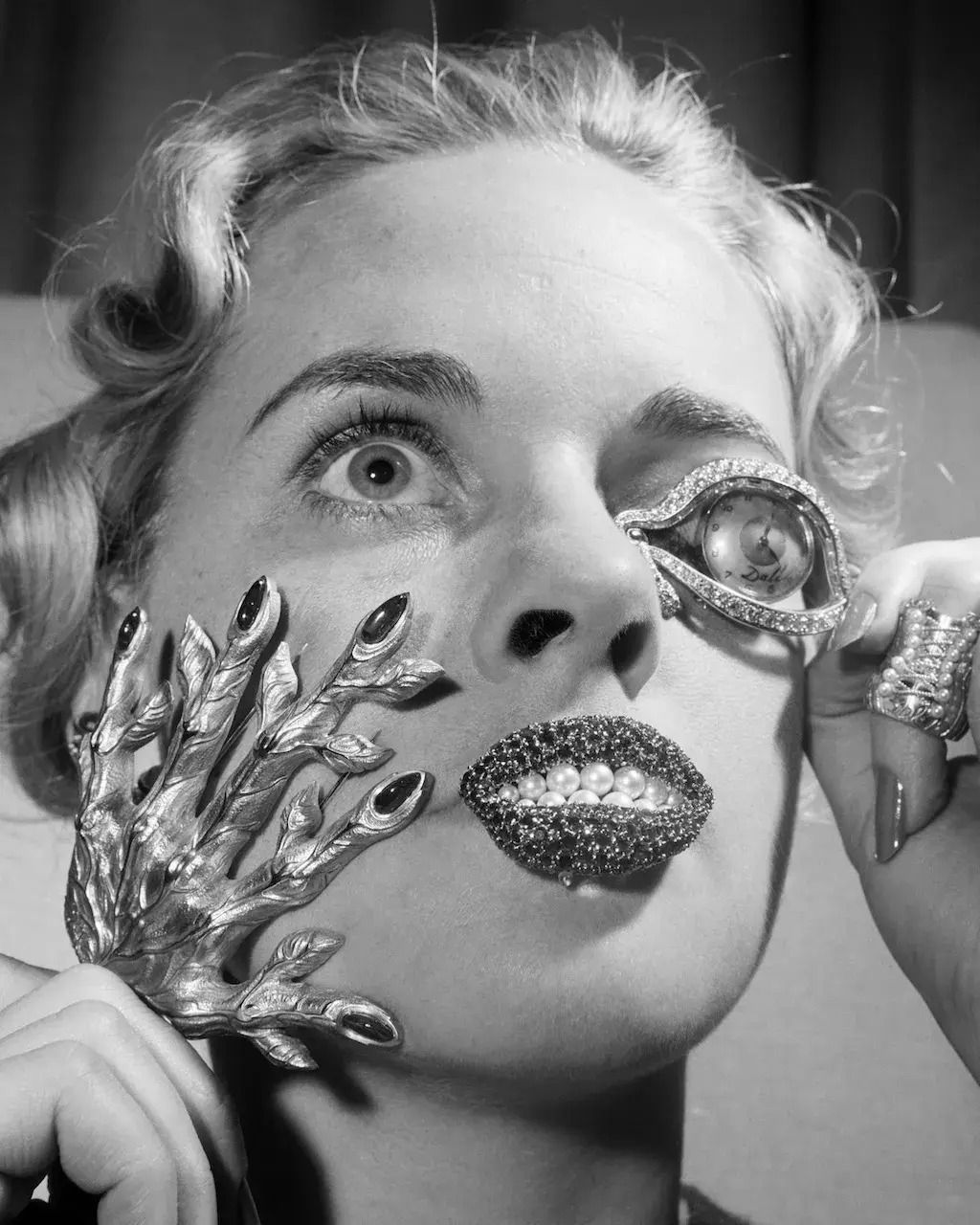
Not many people know this, but Salvador Dalí also designed jewelry.
Trends — what’s bubbling underneath the headlines
No Spend January went mainstream
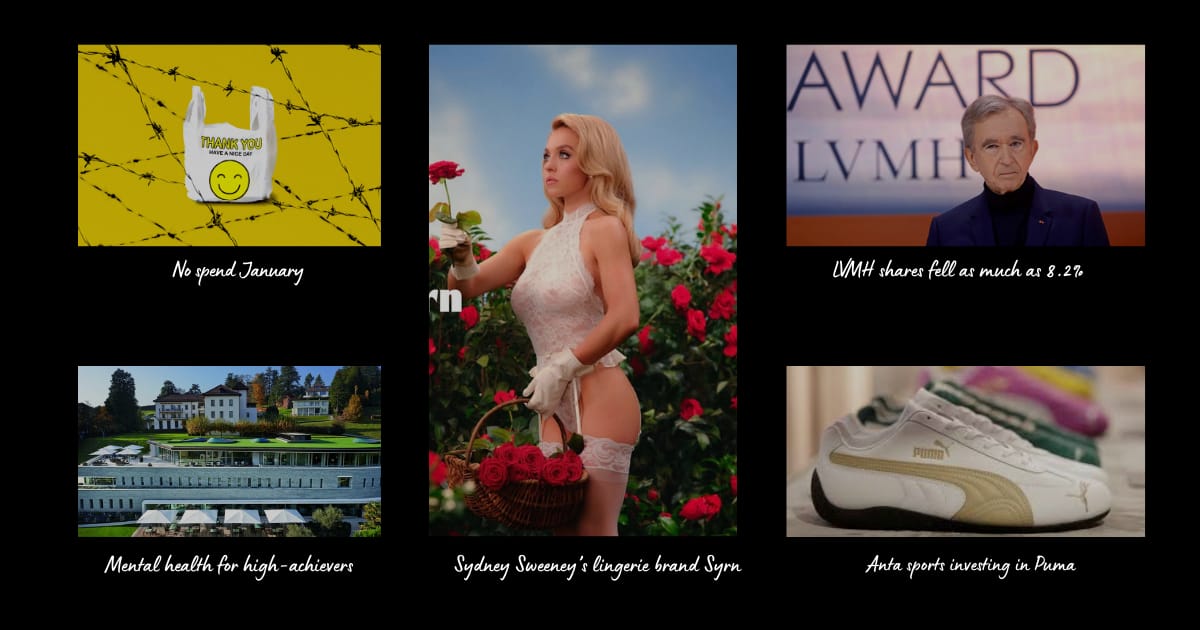
Forget Dry January—this year's self-improvement is keeping your credit card in your pocket. A NerdWallet survey found that 26% of Americans have ever attempted a No Spend January, and 12% of Americans started No Spend January this year.
The rules are simple: participants pause nonessential purchases for the month while continuing to spend on necessities such as housing, utilities, groceries, and transportation. No dinners out. No clearance sale shopping. No "treating yourself" because Mercury is in retrograde.
The trend seems to reflect real financial pressure, not just a TikTok challenge. When your credit card statement arrives looking like a phone number, a month-long shopping fast starts to feel less like deprivation and more like therapy.
Mental health for high-achievers
If your New Year's resolution to "prioritize mental health" meant downloading Calm and then never opening it, Clinique La Prairie has a better alternative. The Swiss luxury wellness clinic launched Life Reset, a week-long mental health program available at its centers in Switzerland and China. The program targets burned-out executives and "high-performing individuals" (their words) looking to escape the doom scroll and recalibrate—think meditation, cognitive assessments, and probably very nice towels. It's part of a broader trend of luxury wellness going beyond facials and into full-on mental rewiring, as the $6.8 trillion global wellness industry increasingly bets that rich people will pay premium prices to feel less stressed about being rich.
The kids are alright, they're just not buying
Gen Z's spending habits continue to confuse everyone trying to sell them things. According to PwC's analysis, Gen Z cut overall spending by 13% between January and April 2025—particularly in categories like apparel, accessories and electronics. And yet 82% of Gen Z say they plan to purchase less expensive alternatives (aka "dupes") and 63% plan to shop for vintage or upcycled products.
Why so cautious? Unemployment is up 2.1 percent for consumers aged 20-24 and Oxford Economics estimates that 1 million more young adults are living at home than pre-pandemic.
Does it really surprise retailers that twenty-somethings still living with their parents are more concerned with survival than ephemeral fashion trends?
Business moves, big numbers & “wait, what?”
LVMH just told luxury investors to maybe chill. LVMH shares fell as much as 8.2%, wiping €24 billion from its market cap on Wednesday after CEO Bernard Arnault warned that "2026 won't be simple." The numbers weren't pretty: full-year revenue dropped 5% to €80.8 billion, net profit slid 13% to €10.9 billion, and the fashion and leather goods division—the profit engine behind Louis Vuitton and Dior—saw organic sales decline 3% in Q4. The fourth quarter did show 1% organic growth overall, but that wasn't enough for investors who'd watched Richemont and Burberry beat expectations earlier this earnings season. Peers Kering, Moncler, Hermès, and Prada all dragged down between 2% and 5%.
Translation: if Arnault's not making promises, your favorite luxury stock shouldn't be either.
Bra-zen move. Sydney Sweeney announced her lingerie brand Syrn (pronounced "siren") this week by decorating the Hollywood sign with bras—a stunt that immediately ignited social media, with aerial footage going viral. Within hours of its global debut, the entire collection was sold out. The line is backed by Jeff Bezos. Call it the Skims playbook—Kim Kardashian's shapewear brand is now valued at $5 billion. Sweeney's bras can do the same. One small problem: the Hollywood Chamber of Commerce says nobody asked permission. Sweeney had a filming permit from FilmLA, but the Chamber owns the sign's intellectual property rights and says she never obtained the required license to actually touch or climb the landmark. Turns out the best marketing money can't buy might also come with a legal bill.
China's Anta is pouncing on Puma. Anta Sports will acquire a 29% stake in Puma from the French billionaire Pinault family for €1.5 billion ($1.8 billion) —a premium exceeding 60% over Puma's closing price. The deal makes Anta Puma's largest shareholder, though Anta has "no current plans" for a full takeover.
Anta has a track record of revamping Western brands—in 2019, it acquired Amer Sports (Wilson, Arc'teryx, Salomon). Now it's betting it can do the same with Puma, just in time for a World Cup year.
Sleep tight, invest right. Travis Kelce (better known as Taylor Swift's fiancé) just became a top shareholder in Sleep Number Corp. He signed a three-year deal as both investor and strategic partner, acquiring common stock and restricted stock units that make him the company's largest individual shareholder (though still under 5%). He'll also star in national TV and digital ad campaigns—fitting for a guy who says he's been a customer since 2019. Sleep Number could use the boost: the stock is trading around $10 a share with a market cap of just $235 million.
But here's the real play. He's also backed Garage Beer, Casa Azul tequila soda, and an ownership stake in a Formula 1 team. The shift from influencer to stakeholder solves a real problem for growing brands: you get global name recognition without burning cash on massive endorsement deals.
Wish I were there - pop-ups, collabs, etc.
Pencil in, book the ticket, or just follow on social media — choose your option and let’s discuss afterwards!
05.02.-07.02.26 | Doha - Art Basel Qatar
Thanks for reading! Have a great week.
Next steps
Please feel free to get in touch. I’d love to hear from you!
Forward this e-mail to a colleague or a friend
Read other content here
Reply